Sump Pump Failure Cleanup in Savage, MN
When a pump stalls in heavy rain, the pit fills and the extra water heads for the lower level. The restoration crew removes it, treats it as gray water and dries out the slab and the walls.
(888) 432-4933Sump overflowed? Call anytime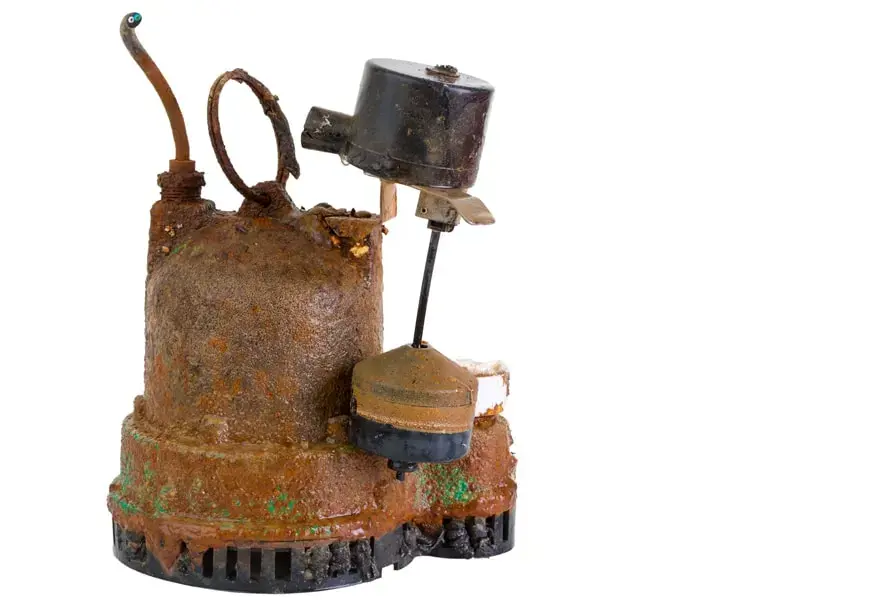
Water headed for a sump pit has already been through soil, which makes it gray from the first minute. That shapes the job: pad is normally discarded and surfaces are treated before drying starts.
First steps for sump pump failure cleanup in Savage
Test the circuit
A dead pump may just have lost power. Check the plug or breaker only while standing on dry ground.
Stay out of the pit area
Do not wade in around the pump, outlets or cords.
Lift valuables
Boxes and electronics belong off the wet floor, in another room.
Photograph the pit
Capture the pit, the pump and each wet room for the claim.
How sump pump failure cleanup is handled in Savage
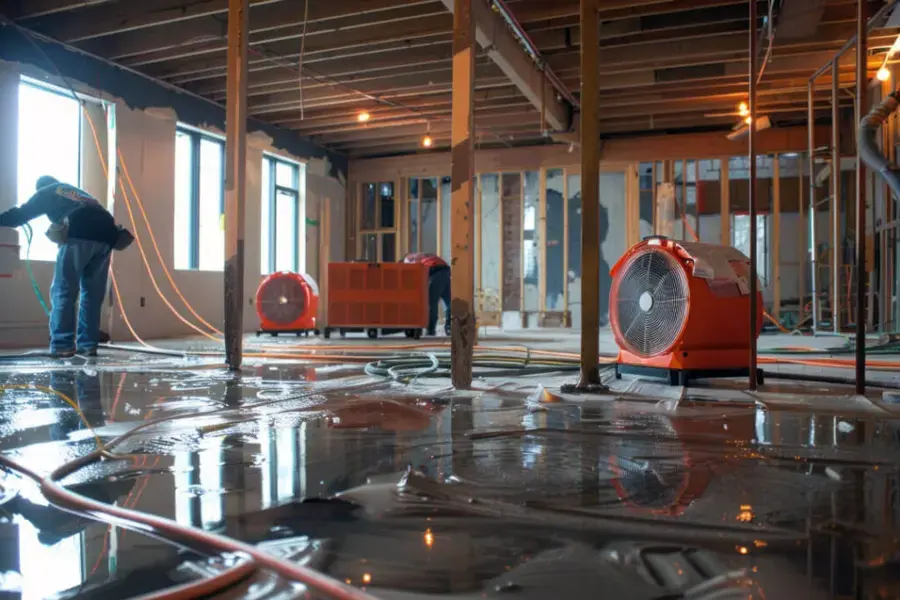
The tech who does the walkthrough maps moisture before any equipment goes down, so the drying plan matches what is actually wet. Equipment stays until the readings say dry, not until it looks dry.
- 1
Trace the overflow
Meters track the water outward from the pit, under carpet, walls and stored boxes.
- 2
Pull the water
Truck-mounted units clear the slab and the carpet.
- 3
Strip and treat
Pad and soaked wall bottoms go out, followed by an antimicrobial pass.
- 4
Dry down to the goal
LGR and desiccant units run while readings are taken each day.
How pumps fail around Savage
A pit can cycle for days during a wet spring and again in a summer cloudburst. No local failure rate is known, but the usual causes are the same in every town.
- A storm outage that stops the pump just as the most water arrives.
- A float switch that sticks, or a motor worn down by hard seasons.
- A discharge pipe blocked outside by ice or debris.
- More inflow than a single pump can move.
How an overflow is cleaned and dried
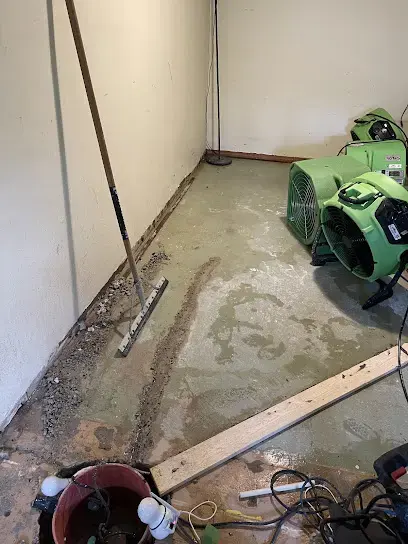
Work begins at the pit and moves outward, with the extraction crew clearing the slab and wringing out the carpet. Gray water means pad is discarded and carpet is either treated or removed. Meters decide which drywall stays, and soaked wall bottoms are opened to let the cavity breathe. LGR dehumidifiers work the air while desiccants pull moisture from the slab. Floods from other sources are covered on basement flooding cleanup.
- After extraction, slab and framing get an antimicrobial wash.
- Pulled baseboards give air a way into the wall bottoms.
- Units keep running until the slab reads close to a dry reference.
Insurance and the claim file
Water that comes up through a sump is often excluded unless the policy includes a water backup endorsement. A claim file benefits from pictures of the pit, the dead pump and the waterline. Coverage depends on the policy, so check with your own insurer. The Burnsville sump overflow page covers the main city.
Sump pump failure cleanup across Savage and nearby towns
The Savage restoration crew handles pit overflows in ZIP 55378, from Glendale and Dufferin Park out to Hamilton Ridge and homes near the Highway 101 corridor, with extra attention after big storms.
The same service nearby: sump pump failure cleanup in Burnsville, Bloomington, Lakeville.
Related water damage services in Savage
Sump Pump Failure Cleanup questions in Savage, MN
01Is sump water considered dirty?
Yes. The water has been through soil and drain tile on the way to the pit, which makes it Category 2.
02Will the carpet survive an overflow?
The pad usually does not. Carpet occasionally survives cleaning and treatment when removal starts fast, but not always.
03What makes a pump stop in the middle of a storm?
Storm outages top the list. A pump with no battery backup goes silent exactly when inflow peaks.
04Does a homeowner policy cover sump overflow?
Often only when a water backup endorsement was added. Check your policy, and save photos and the drying records.
05What lowers the chance of a repeat?
Run the pump before wet weather, add battery power, check that the discharge pipe is open and ask whether a second pump makes sense.
06When will everything be dry?
Three to six days covers most overflow dry-outs, and block and slab need extra time.
Sump failed in your Savage home? Get it dried.
Pit water is gray water, and it soaks pad and wall bottoms fast. The first job is getting it out.
Burnsville Water Damage Restoration · Burnsville, MN