Water Extraction in Savage, MN
Pooled water from a storm, a split pipe or a leaking tank wicks into pad and drywall within hours. The extraction crew lifts it out with truck-mounted gear and presses the carpet before moisture climbs the walls.
(888) 432-4933Get the Savage water out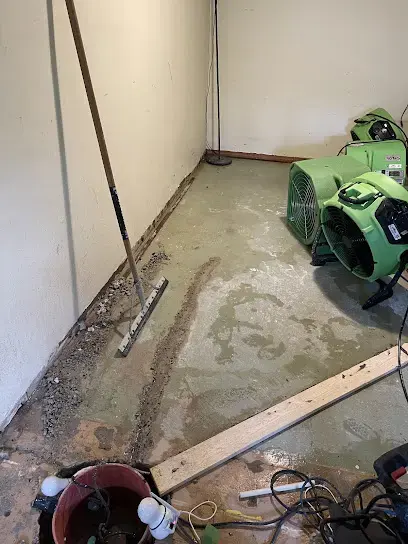
Pulling water out beats evaporating it. A single truck-mounted unit lifts more in a few minutes than a room of air movers can dry in a day, so careful extraction trims the whole job and saves more of the house.
First steps for water extraction and removal in Savage
Stop the flow
Close the main valve, or the fixture valve if one appliance is the source, so nothing new reaches the floor.
Make the power safe
Switch off breakers only from a dry panel. Stay out of water around cords and outlets.
Move things up
Get boxes, rugs and electronics up off the damp floor and into a dry room.
Take photos first
Record the water depth and how far it has run before any extraction starts.
How water extraction and removal is handled in Savage
The tech who does the walkthrough maps moisture before any equipment goes down, so the drying plan matches what is actually wet. Equipment stays until the readings say dry, not until it looks dry.
- 1
Chart the wet zone
Meters and a thermal camera show how far water traveled, even under walls.
- 2
Lift the water out
Truck mounts clear the puddles while weighted tools squeeze carpet and pad.
- 3
Place the equipment
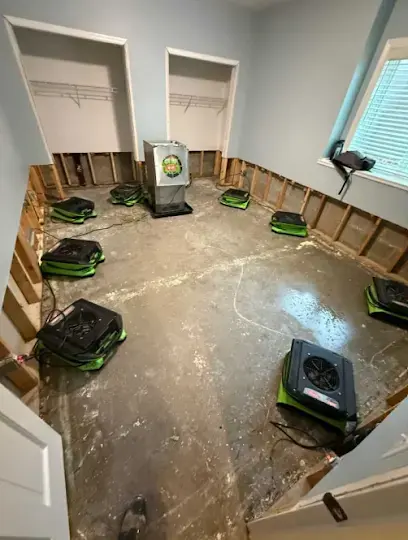
Air movers and LGR dehumidifiers are matched to the room's class of loss.
- 4
Prove it is dry
Readings are written down daily, and equipment stays until the dry reference is met.
Where water gathers in Savage homes
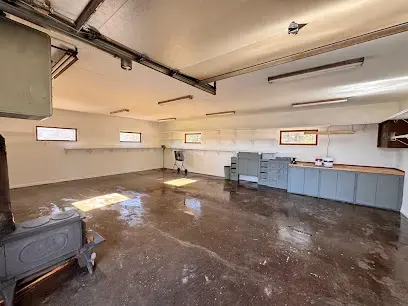
Most Savage houses date from 1980 on, with 8,539 detached homes and 2,486 attached ones. Water from a split pipe or a leaking tank slides under flooring toward the lowest corner, while a heavy storm can leave pooled water in a garage or entry. A floor drain that cannot keep pace adds to it.
- Carpeted rooms above a concrete slab.
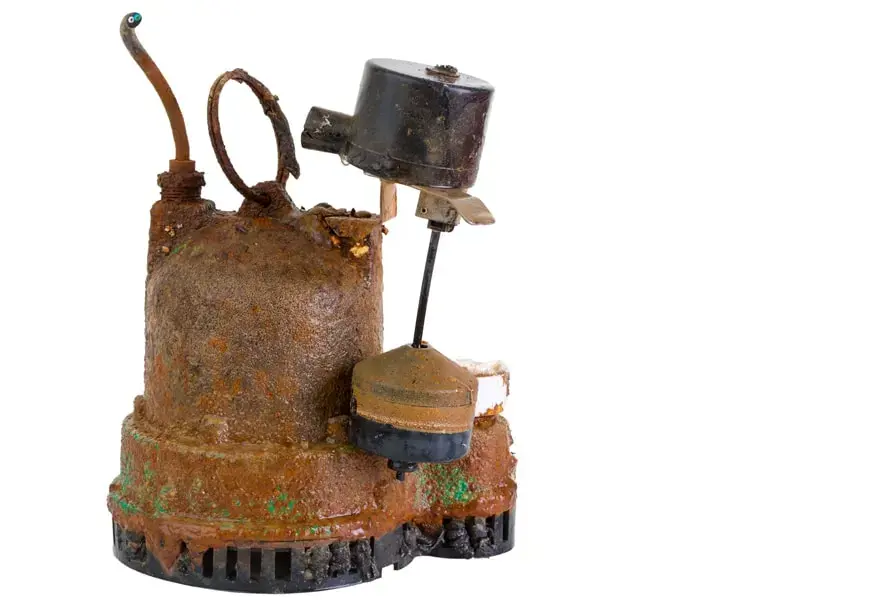
- Utility rooms where a floor drain sits at the lowest point.
- Garages and entries where rain collects.
How the extraction crew works
Work starts at the deepest point. A truck-mounted unit with long hoses sends the water outside instead of shifting it to the next room. A weighted tool glides over the carpet and squeezes the pad so water rises out of it, which can save a pad after a clean-water loss. Hard floors and concrete get squeegees and wands, and structural drying is set up straight after.
- Clean loss: carpet and pad frequently stay in place.
- Gray loss: the pad is typically discarded and the carpet cleaned or replaced.
- Black loss: porous materials leave the house; see sewage backup cleanup.
What extraction means for the claim
An adjuster wants evidence that the water was removed quickly and that the drying met the standard. Photos of the standing water, the moisture map and each day's readings supply it. For the main-city version of this work, see water extraction in Burnsville. Coverage depends on the policy, so check with your own insurer.
Water extraction and removal across Savage and nearby towns
The Savage restoration crew covers all of ZIP 55378, from Glendale and Glendale Woods to Downtown Savage, Redtail Ridge and the homes and shops along Highway 13 and County Road 42.
The same service nearby: water extraction and removal in Burnsville, Bloomington, Lakeville.
Related water damage services in Savage
Water Extraction and Removal questions in Savage, MN
01Is a shop vacuum enough for a flooded floor?
A shop vacuum skims the surface slowly and cannot squeeze water out of pad. Truck-mounted units move far more water, which cuts the drying time and saves more materials.
02Can the carpet be saved?
Often, if the water was clean and removal started soon. Gray water usually costs the pad, and sewage means both carpet and pad are removed.
03Why does water come out before fans go in?
Fans work by evaporation, and evaporation is slow. Pulling out the bulk of the water first leaves far less to dry and shortens the whole job.
04How is water found inside the walls?
Pinless meters and a thermal camera trace moisture under baseboards, into wall bottoms and along the slab, well beyond what shows to the eye.
05Is it safe to walk through standing water?
Not near outlets, cords, a furnace or a water heater. Stay out until the power to that area is off.
06What comes after the water is gone?
Drying equipment goes in, and readings are logged every day. A small contained loss often finishes in three to five days.
Standing water in your Savage home? Get it out.
Each hour in the pad and drywall makes the repair bigger. Pulling the water out is step one, and S500 drying follows.
Burnsville Water Damage Restoration · Burnsville, MN