Water Extraction in Burnsville, MN
Every gallon pulled out with a wand is a gallon the dehumidifiers never have to evaporate. The extraction crew removes standing water and squeezes carpet and pad before the water climbs into drywall.
(888) 432-4933Get the standing water out now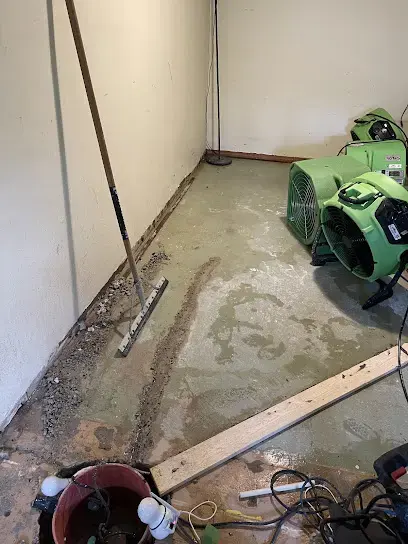
Extraction is the cheapest drying there is. A truck-mounted unit removes water many times faster than air movers can evaporate it, so the crew that extracts well shortens the whole job and keeps more of the house in place.
First steps for water extraction and removal in Burnsville
Shut off the source
Close the main valve or the fixture valve so no new water reaches the floor.
Cut power to wet areas
Only from a dry panel; never step into water near outlets or cords.
Lift what can be lifted
Get boxes, rugs and electronics up off the wet floor and out of the room.
Photograph the water
Capture how deep and how far it spread before extraction starts.
How water extraction and removal is handled in Burnsville
The tech who does the walkthrough maps moisture before any equipment goes down, so the drying plan matches what is actually wet. Equipment stays until the readings say dry, not until it looks dry.
- 1
Find the edges
Meters and thermal imaging show where the water reached, including under walls.
- 2
Extract
Truck-mounted units pull standing water and weighted tools press out carpet and pad.
- 3
Set the drying
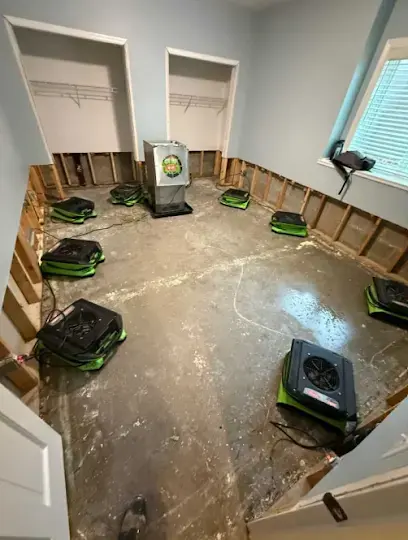
Air movers and LGR dehumidifiers go in sized to the class of loss.
- 4
Verify dry
Readings are logged daily until materials match the dry reference.
Where water collects in Burnsville homes
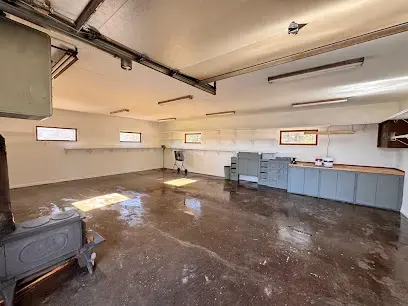
Split-level and split-entry houses built across Burnsville from the 1960s through the 1980s send water downhill: down the half-flight of stairs, under the lower-level carpet and across the slab toward the floor drain or sump. Walkout lower levels near Crystal Lake, Keller Lake and Earley Lake add groundwater in the spring.
- Finished lower levels with carpet over pad on a concrete slab.
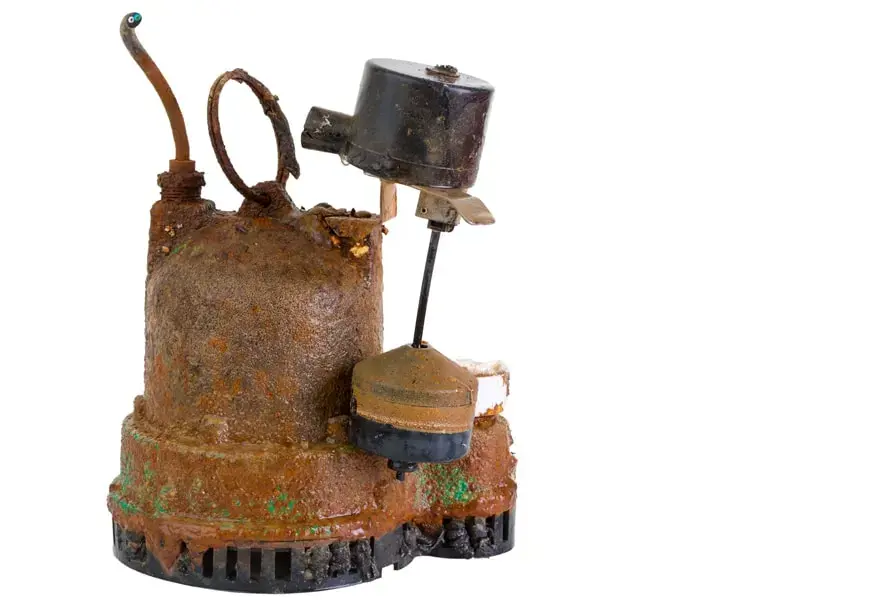
- Laundry and utility rooms with a floor drain that cannot keep up.
- Garages and entries where snowmelt tracks in and pools.
How the extraction crew removes the water
The crew starts with the deepest water, using a truck-mounted unit with long hoses so the water leaves the building instead of moving to the next room. On carpet, a weighted extraction tool presses the pad so water comes up from underneath, which is often enough to save the pad on a clean-water loss. Hard floors and concrete get squeegees and wands, and the structural drying setup follows right behind.
- Category 1 water: carpet and pad are often extracted and dried in place.
- Category 2 water: pad usually comes out, carpet may be saved and treated.
- Category 3 water: porous materials are removed, see sewage backup cleanup.
What extraction means for the claim
Adjusters look for proof that the water was removed promptly and that drying followed the standard. Photos of standing water before extraction, the moisture map and the daily logs carry that proof. Coverage depends on your policy, so it is worth confirming with your own insurer. The Ready.gov flood safety page covers electrical hazards around standing water, and the EPA moisture and mold page explains why the first two days matter.
Water extraction and removal across Burnsville and northern Dakota County
The Burnsville restoration crew covers ZIP 55306 and 55337, from the Heart of the City and the Burnsville Center area out to Crystal Lake, Lac Lavon, Buck Hill and the river bluffs along Cliff Road.
Nearby coverage reaches Apple Valley, Savage, Bloomington, Eagan, Lakeville, Prior Lake, Rosemount.
Related water damage services in Burnsville
Water Extraction and Removal questions in Burnsville, MN
01Can a shop vacuum do the same job?
A shop vacuum removes surface water slowly and cannot press water out of pad. Truck-mounted extraction removes far more water, which shortens drying and saves materials.
02Will my carpet be saved?
Often, if the water was clean and extraction started quickly. Gray water usually means the pad goes, and Category 3 water means carpet and pad are removed.
03Why does extraction come before fans?
Air movers dry by evaporation, which is slow. Pulling water out first means far less water has to be evaporated and dried out of the air.
04How do you know where the water went?
Moisture meters and thermal imaging trace water under baseboards, into wall bottoms and across the slab, beyond what is visible.
05Is standing water in a basement dangerous?
It can be. Water near outlets, cords, a furnace or a water heater is an electrical and gas hazard. Stay out until power to the area is off.
06How long does drying take after extraction?
A contained Class 1 loss usually dries in three to five days. Concrete, block and hardwood take longer.
Standing water in your Burnsville home? Get it out.
The longer water sits, the deeper it soaks. Extraction first, then drying to the S500 goal.
Burnsville Water Damage Restoration · Burnsville, MN