Structural Drying and Dehumidification in Burnsville, MN
Structural drying is what turns a wet house back into a dry one, not just a dry-looking one. The drying team sizes air movers and dehumidifiers to the class of loss and logs readings until the materials reach the goal.
(888) 432-4933Get the drying started today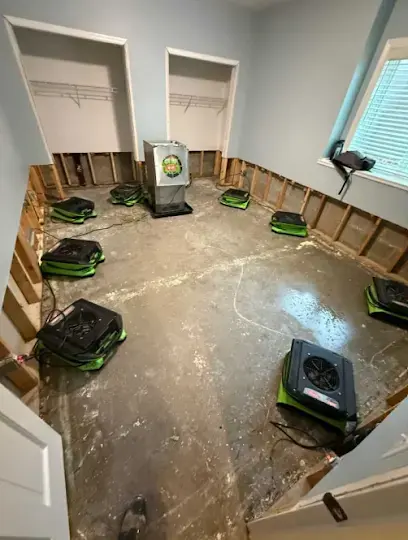
Surfaces dry fast; framing, subfloor and concrete do not. Structural drying is the process of getting water out of the materials themselves, and the IICRC S500 standard defines how it is done and when it is finished.
First steps for structural drying and dehumidification in Burnsville
Stop the source
No drying works while water is still coming in.
Extract standing water
Get water out before relying on fans or dehumidifiers.
Leave the equipment running
Turning units off at night slows the dry-out.
Keep the house warm
Moderate warmth helps evaporation, so leave the heat on in winter.
How structural drying and dehumidification is handled in Burnsville
The tech who does the walkthrough maps moisture before any equipment goes down, so the drying plan matches what is actually wet. Equipment stays until the readings say dry, not until it looks dry.
- 1
Map and reference
Moisture map plus a dry reference reading for the goal.
- 2
Size the equipment
Class of loss sets air movers and dehumidification per room.
- 3
Dry and adjust
Daily readings guide equipment moves and removals.
- 4
Verify the goal
Materials within 2 to 4 points of the dry reference.
What makes Burnsville drying different
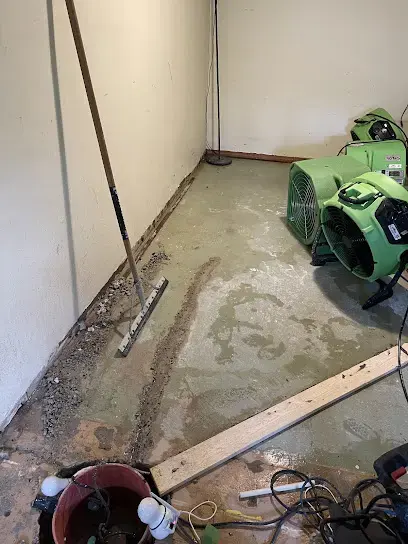
Burnsville losses lean toward lower levels: concrete slabs, block and poured walls, and finished family rooms partly below grade. Dense materials hold water and release it slowly, and the season changes the air the drying team is working with.
- Humid summer air that slows evaporation without strong dehumidification.
- Dry heated winter air that helps, once the house is warm.
- Concrete and block that often need desiccant dehumidifiers.
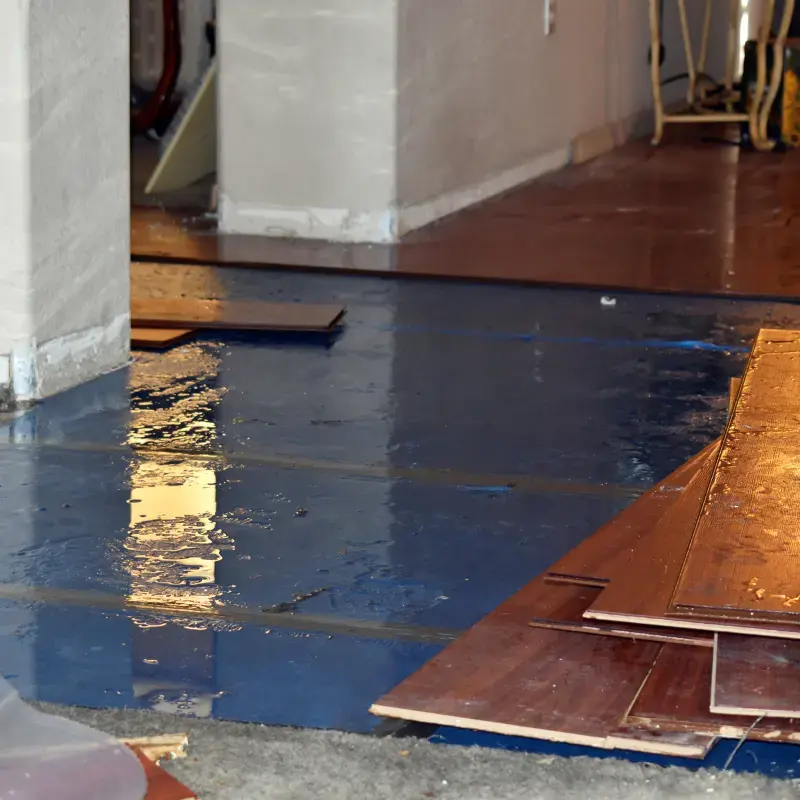
- Hardwood floors that need drying mats and patience.
How the drying system is set up
The tech who does the walkthrough maps moisture and takes a reading from a dry reference material in an unaffected part of the house. The class of loss, Class 1 through 4, sets how many air movers and how much dehumidification each room needs. Air movers sweep the wet surfaces, LGR dehumidifiers pull the water out of the air, and wall cavity systems and drying mats push air where the water is. Water extraction always comes first, because every gallon removed is a gallon that never has to be evaporated.
- Psychrometric readings, temperature and humidity, logged daily.
- Equipment moved and adjusted as areas dry.
- Equipment removed only when materials read within 2 to 4 points of the dry reference.
Why the logs matter for the claim
Adjusters pay for drying days and equipment based on documentation. The moisture map, the daily psychrometric logs and the final readings show why each piece of equipment was there and when the job reached the goal. Coverage depends on your policy, so it is worth checking with your own insurer. The EPA moisture and mold page explains why drying speed matters, and the Energy Saver site covers home humidity.
Structural drying and dehumidification across Burnsville and northern Dakota County
The Burnsville restoration crew covers ZIP 55306 and 55337, from the Heart of the City and the Burnsville Center area out to Crystal Lake, Lac Lavon, Buck Hill and the river bluffs along Cliff Road.
Nearby coverage reaches Apple Valley, Savage, Bloomington, Eagan, Lakeville, Prior Lake, Rosemount.
Related water damage services in Burnsville
Structural Drying and Dehumidification questions in Burnsville, MN
01What does dry actually mean?
Under the IICRC S500 standard, a material is dry when it reads within 2 to 4 points of the same material in an unaffected part of the house.
02Why can't I just open the windows?
Outside air is often humid or cold. Controlled dehumidification removes water from the air steadily; open windows can slow drying or add moisture.
03What is an LGR dehumidifier?
A low grain refrigerant dehumidifier pulls more water from the air than a household unit, which keeps evaporation going in wet rooms.
04When are desiccant dehumidifiers used?
For dense, Class 4 materials like concrete, block, hardwood and plaster, and in cold conditions where refrigerant units slow down.
05Why is the equipment so loud?
Air movers move a lot of air across wet surfaces. The noise is temporary and the units come out as soon as readings reach the goal.
06How long does structural drying take?
Three to seven days is common. Concrete, block and hardwood can take longer.
Need the structure dried in Burnsville? Call today.
Dry-looking is not dry. Readings decide when the equipment comes out.
Burnsville Water Damage Restoration · Burnsville, MN