Structural Drying and Dehumidification in Bloomington, MN
A floor that feels dry can still hold water in the subfloor beneath it. Equipment is sized room by room by loss class, and the drying team logs readings until framing, subfloor and concrete reach the goal.
(888) 432-4933Start the dry-out now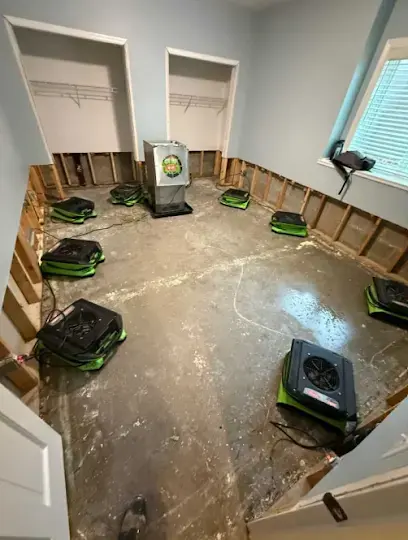
A surface dries in a day, but framing, subfloor and concrete keep their water far longer. Structural drying removes moisture from inside those materials, and IICRC S500 spells out the method and the end point.
First steps for structural drying and dehumidification in Bloomington
Remove the source
Stop the leak or pump out the water before drying equipment goes in.
Leave units alone
Do not switch off or move equipment, and keep doors and windows closed.
Expect noise
Dehumidifiers and air movers run around the clock until readings pass.
Keep a record
Photograph the rooms and note when the equipment was set.
How structural drying and dehumidification is handled in Bloomington
The tech who does the walkthrough maps moisture before any equipment goes down, so the drying plan matches what is actually wet. Equipment stays until the readings say dry, not until it looks dry.
- 1
Map and reference
Meters chart wet materials, and a dry sample sets the target.
- 2
Place equipment
Air movers and dehumidifiers are matched to each room's class.
- 3
Monitor
Readings and psychrometrics are logged every day and units are adjusted.
- 4
Release
Equipment is pulled once wood and concrete land within 2 to 4 points of the reference.
What shapes drying in Bloomington
Most Bloomington homes were built between 1950 and 1979, with 8,737 in the 1950s, 6,939 in the 1960s and 8,055 in the 1970s, and the median home dates from 1972. The city describes older, compact homes east of Interstate 35W and newer, larger ones west of it, so room sizes, finishes and subfloors differ and the equipment plan does too.
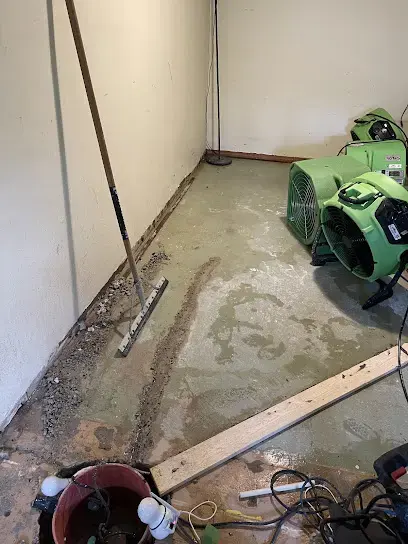
- Dense slabs and block walls that need desiccant units.
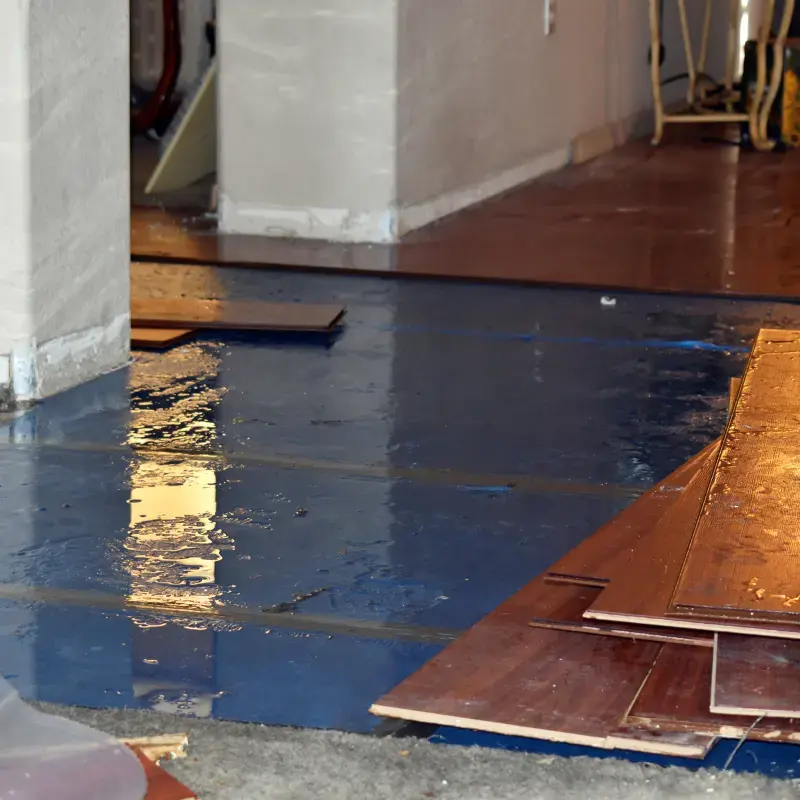
- Hardwood floors, which dry best slowly under mats.
- Muggy summer air, which slows drying unless the dehumidifiers are strong.
- Winter heating that dries the air and speeds the job once the house is warm.
How the system is set up
To begin, the tech maps wet materials and takes a reference reading in an unaffected room. Loss class, numbered 1 through 4, determines how many air movers and how much dehumidifying capacity each room needs. Air movers push air across wet surfaces, LGR units condense water out of the air, and cavity systems and mats drive air into the spots where water hides. Water extraction goes first every time, because each gallon pumped out is one nothing must evaporate.
- Temperature and humidity are recorded each day.
- Equipment is moved as areas dry.
- Units leave only after materials land within 2 to 4 points of the reference reading.
What the paperwork proves
Drying days and equipment get paid for on the strength of the paperwork. The moisture map, the daily psychrometric logs and the closing readings show why each unit ran and when the job finished. Coverage depends on your policy, so check with your own insurer. The Burnsville page covers the same service.
Structural drying and dehumidification across Bloomington and nearby towns
Structural drying covers ZIP 55420, 55425, 55431, 55435, 55437 and 55438, from East Bloomington homes and West Bloomington houses to the Normandale Lake District and the Southtown Center area.
The same service nearby: structural drying and dehumidification in Burnsville, Savage, Eagan.
Water damage restoration in Bloomington · every town covered
Related water damage services in Bloomington
Structural Drying and Dehumidification questions in Bloomington, MN
01When is a house considered dry?
When framing, subfloor and concrete read within 2 to 4 points of an unaffected reference material, not merely when the surface feels dry.
02Why not open the windows and wait?
Outside air is often as humid as the room, and it cannot pull water from inside walls or concrete. Dehumidifiers control the air in a closed space.
03What is special about an LGR dehumidifier?
It is a low grain refrigerant unit that keeps pulling water out of air even when the air is already fairly dry.
04When do desiccant units get used?
Concrete, block and hardwood are dense enough to call for them, and so are cooler conditions that slow refrigerant units.
05Why does the equipment run so loudly?
Air movers and dehumidifiers push large volumes of air to lift water from materials, and the noise ends when drying does.
06How long will it take?
Plan on three to seven days, with dense materials and bigger losses adding more.
Bloomington building still wet inside? Call the drying team.
Dry to the touch is not dry in the framing. Only readings decide when the equipment can leave.
Burnsville Water Damage Restoration · Burnsville, MN