Basement Flooding Cleanup in Bloomington, MN
Frozen ground, clogged storm inlets and a stalled pump all push water at a Bloomington foundation. The crew pumps out the lower level, traces where it came from, then dries carpet, walls and slab until readings agree.
(888) 432-4933Flooded lower level? Call the crew
Melted snow, a dead pump, a leaking supply pipe or a sewer problem each put a different category of water in the room, and the category determines which materials can be saved.
First steps for basement flooding cleanup in Bloomington
Keep your distance
Stay out of water that reaches outlets, cords, the furnace or the water heater.
Check the pump
A quiet pump over a filling pit may just need its breaker reset; try that only while standing on a dry floor.
Raise the contents
Boxes, electronics and rugs go to the main floor or onto tall furniture.
Document it
Photograph the water height, the walls and the floor drain before anything is touched.
How basement flooding cleanup is handled in Bloomington
The tech who does the walkthrough maps moisture before any equipment goes down, so the drying plan matches what is actually wet. Equipment stays until the readings say dry, not until it looks dry.
- 1
Trace the source
Snowmelt, a pump, a drain or a supply pipe: each origin sets the category.
- 2
Pull water, then materials
Water goes first; carpet, pad and board go only if category or readings demand.
- 3
Dry the shell
Air movers, LGR dehumidifiers and desiccant units go in by room.
- 4
Read until dry
Daily readings continue until walls, framing and slab hit the goal.
Why Bloomington lower levels take on water
The city lists frozen ground, ice dams and clogged storm inlets as spring causes of localized flood risk, and it advises keeping downspouts pointed at least six feet from the foundation. Add a pump that stalls during a big melt and water comes up through the floor and in through the walls.
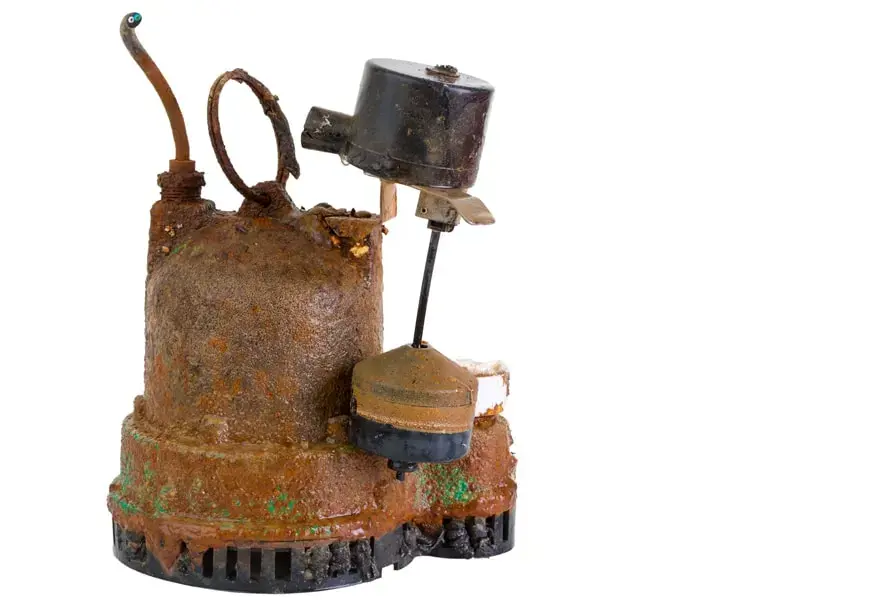
- Thaw and storm water that finds the foundation; the sump pump failure cleanup page covers pit and pump trouble.
- A sewer backup, which is Category 3 and is covered on sewage backup cleanup.
- A tank or a supply connection that fails in a finished room.
Getting the lower level dry
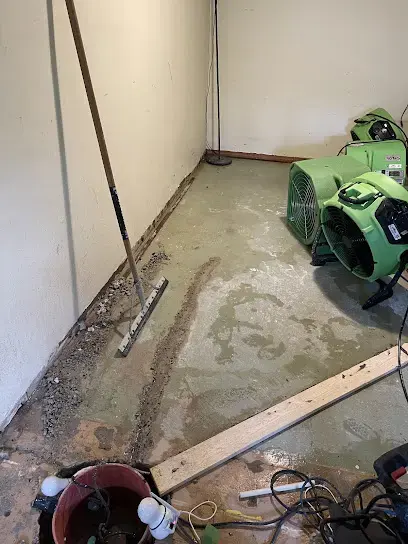
The extraction crew works across the slab and through the carpet to remove the standing water first. Meters then read the wall bottoms, the pad and the concrete. Clean supply water caught quickly may let carpet and drywall stay. Thaw or sump water usually costs the pad and some baseboard, and the wall cavities are opened so they can breathe. Concrete releases moisture slowly, so desiccant units often run next to the LGR dehumidifiers.
- Cuts stay limited to the board and insulation the meters flag.
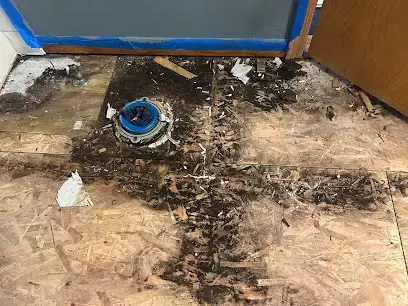
- Gray or black water means antimicrobial on the framing and the slab.
- Equipment keeps running until slab and walls read like dry reference material.
Housing mix, sources and the claim
The city describes homes east of Interstate 35W as older with compact development and homes to the west as newer, larger and on larger lots, so lower-level layouts and finishes vary and each gets its own plan. Sump overflow and sewer backup often need an endorsement. Coverage depends on your policy, so check with your own insurer. The same work in Burnsville follows the same standard.
Basement flooding cleanup across Bloomington and nearby towns
Bloomington lower-level work covers ZIP 55420, 55425, 55431, 55435, 55437 and 55438, including East and West Bloomington, the Normandale Lake District and the Hyland Hills and Oxboro neighborhoods.
The same service nearby: basement flooding cleanup in Burnsville, Savage, Eagan.
Water damage restoration in Bloomington · every town covered
Related water damage services in Bloomington
Basement Flooding Cleanup questions in Bloomington, MN
01Is a box fan enough after a basement floods?
Fans stir damp air but pull no water out of walls or concrete. Pumping and dehumidifying do the real work.
02Will the basement carpet be replaced?
Often not, when clean water is caught quickly. Thaw water, sump overflow and sewage tend to take the pad with them, and sometimes the carpet too.
03Does the city check my sewer when a backup happens?
The Bloomington Utilities Division checks the main under the street at no charge once a backup is reported. From the house out to that main, the pipe is the owner's to maintain and repair.
04What does the city suggest before spring?
Test the sump pump, think about a battery backup and keep downspouts pointing water at least six feet from the foundation.
05Why is the concrete still damp after the carpet dried?
Dense materials such as slab and block drink water in and release it at their own pace, so the plan can include desiccant units and more days.
06How soon should drying begin?
As early as possible. Wet drywall and carpet pad degrade fast, and mold can start within 24 to 48 hours.
Basement flooded in Bloomington? Start drying it out.
Carpet, drywall and concrete soak up more with every hour. The extraction crew begins at the deepest water.
Burnsville Water Damage Restoration · Burnsville, MN