Appliance Leak Water Damage in Bloomington, MN
Washer, dishwasher and ice maker leaks tend to wet the subfloor and cabinet bases long before a puddle appears. Meters find the water, and the drying team dries it in place instead of gutting the room.
(888) 432-4933Appliance leaking? Call now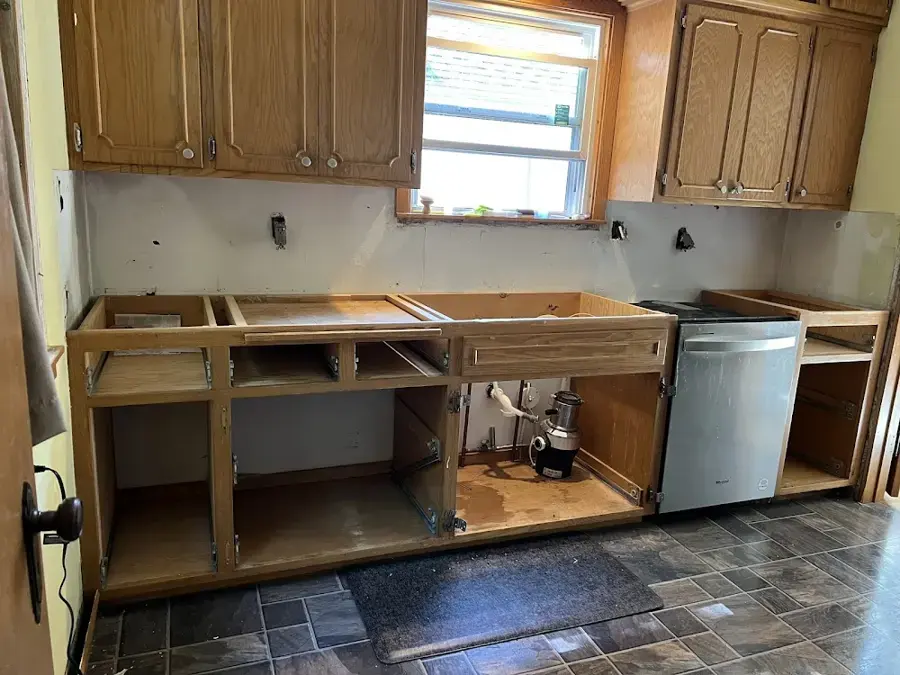
Where the water came from sets its category: clean supply water feeding a dishwasher or ice maker, or gray drain water from a washer or dishwasher. That category decides how much can be dried in place.
First steps for appliance leak water damage in Bloomington
Turn it off
Shut the water at the appliance valve or the shutoff under the sink.
Unplug carefully
Pull the plug only if the floor around the outlet is dry.
Mop up and lift
Remove standing water and lift rugs or mats off the wet floor.
Keep the part
Photograph the failed hose or fitting beside the damage.
How appliance leak water damage is handled in Bloomington
The tech who does the walkthrough maps moisture before any equipment goes down, so the drying plan matches what is actually wet. Equipment stays until the readings say dry, not until it looks dry.
- 1
Find the water
Meters track it under the appliance, cabinets and floating floor.
- 2
Extract
Standing water comes out of the floor and cabinet bases.
- 3
Open and dry
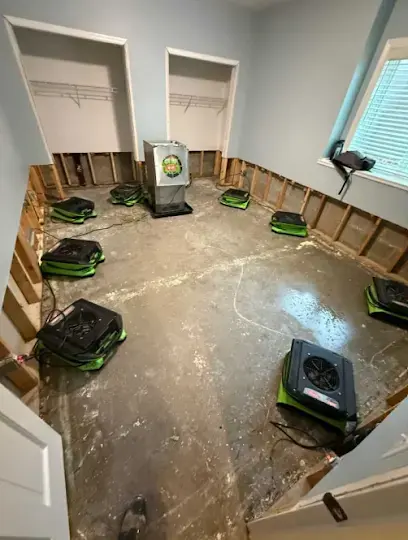
Toe kicks and planks come off, and mats and air movers go in.
- 4
Verify
Readings continue until the subfloor and cabinets pass.
Leaks in houses, rentals and condos
Bloomington has 12,879 renter-occupied homes and 24,722 owner-occupied ones, so appliance hoses fail in everything from single-family kitchens to upper-floor apartment laundries. The parts that give out are familiar.
- A burst or slipped washer hose.
- A dishwasher inlet or drain fitting that seeps beneath the sink.
- Cracked ice maker tubing behind the refrigerator.
- A leaking sink drain or garbage disposal inside the base cabinet.
How the dry-out proceeds
The tech inspects below and behind the appliance, inside neighboring base cabinets, under any floating floor and up into the ceiling of the room beneath. Extraction of standing water comes first. Meters decide where kick plates or cabinet floors must open, and click-together planks are often lifted because water collects on the subfloor beneath them. Drying mats, air movers and LGR dehumidifiers then go to work, as described on structural drying.
- Toe kick boards come away to let air pass beneath the boxes.
- Gray water from washer or dishwasher drains means an antimicrobial pass.
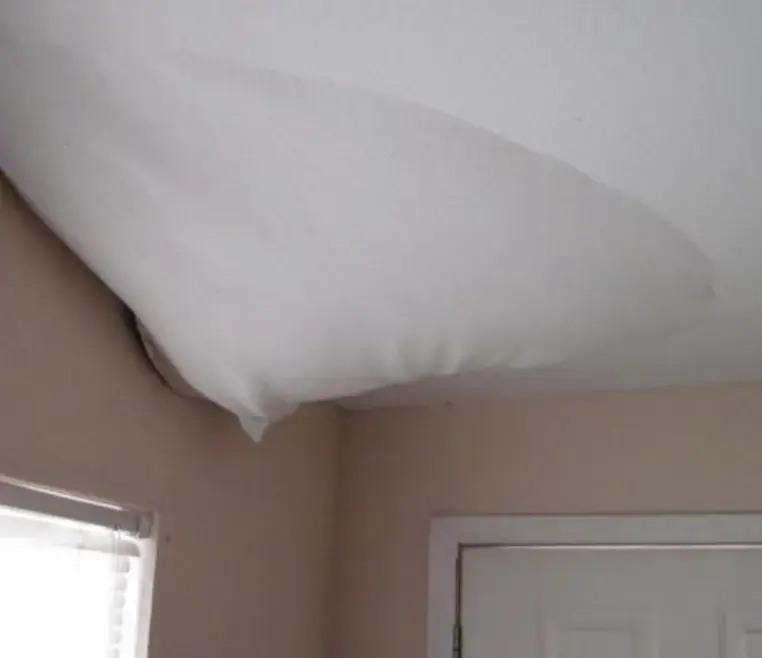
- The ceiling under an upstairs laundry is checked.
Rentals, claims and the failed part
A rental adds the lease and the building's policy to the question of who pays, so the property manager should hear about it early. Insurers tend to treat a sudden hose burst differently from a drip that has been rotting the subfloor for months. Save the failed part and photograph it with the damage. Coverage depends on your policy, so check with your own insurer. Water that dripped into the unit below is covered on ceiling leak water damage.
Appliance leak water damage across Bloomington and nearby towns
Appliance leak work covers ZIP 55420, 55425, 55431, 55435, 55437 and 55438, from West Bloomington kitchens and East Bloomington houses to apartment laundries in the Penn-American and South Loop Districts.
The same service nearby: appliance leak water damage in Burnsville, Savage, Eagan.
Water damage restoration in Bloomington · every town covered
Related water damage services in Bloomington
Appliance Leak Water Damage questions in Bloomington, MN
01Will the cabinets need replacing?
Frequently not. Toe kicks come off, air is pushed beneath the boxes and only parts that stay swollen or soaked are replaced.
02Why does the floor feel wet under click-together planks?
Floating floors trap leaked water against the subfloor, so a puddle can sit below planks that look fine.
03Is washer water contaminated?
Fresh supply water is clean, while the drain side carries gray water and is treated differently.
04How often do washer hoses need replacing?
Many people swap them every few years, often for braided hoses. Look for bulges, kinks and rust.
05Does insurance pay for an appliance leak?
A sudden burst is often covered, while a slow drip usually is not. Read your policy and save the failed part.
06How many days to dry?
Often three to five days, longer for cabinets and subfloors.
Appliance leak in Bloomington? Start drying.
Water hides beneath cabinets and floating floors, so meters find it before the subfloor rots.
Burnsville Water Damage Restoration · Burnsville, MN