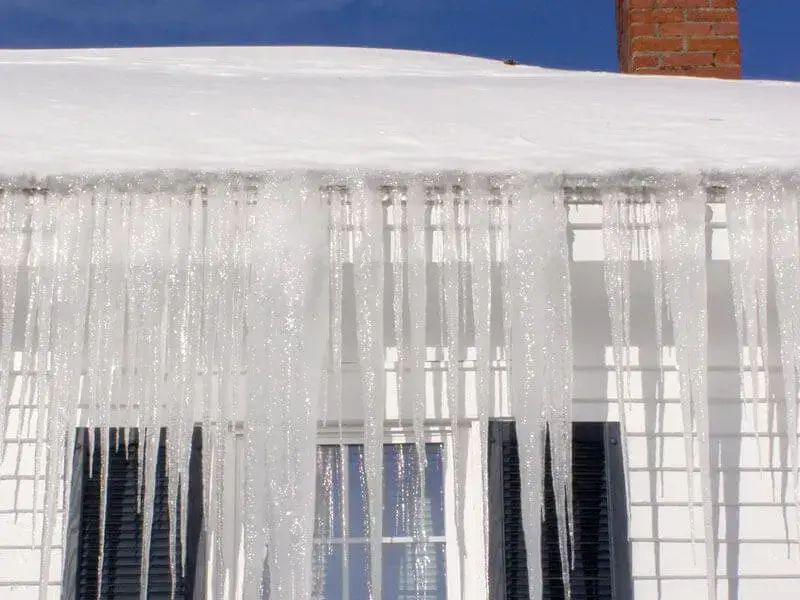
A ceiling stain that appears after a thaw often has nothing to do with a plumbing leak. In Burnsville, deep snow and long stretches below zero set the stage for ice dams, and the water they trap finds its way indoors.
Key takeaways
- An ice dam forms when snow on a warm roof melts, runs to the cold edge and refreezes, so later meltwater backs up under the shingles.
- Burnsville has long, below zero winters and deep snowpack, and its homes are mostly split levels, split entries and ramblers from the 1960s through the 1980s.
- Signs include ceiling stains near exterior walls, wet insulation, bubbling paint and drips at window tops.
- Roof, attic and drying work belong in one plan, because fixing only one leaves water behind in the other.
- Bloomington's city notes name ice dams, frozen ground and clogged storm inlets as sources of localized flood risk, a pattern that applies next door too.
How an ice dam forms
Heat from the living space leaks into the attic and warms the roof deck. Snow on the upper roof melts, and the water runs down toward the eave.
At the eave the roof is colder, so the water refreezes into a ridge of ice. The next round of meltwater backs up behind it and finds seams and nail holes in the shingles.
The whole process is slow, which is why ice dams tend to appear in the middle of a long cold stretch followed by a thaw, not in a single storm.
Why Burnsville sees them
Burnsville winters are long and often well below zero, with deep snowpack that sits on roofs for weeks. Then March and April bring melt, and the cycle of freezing nights and warm days makes ice dams likely.
The city's housing is mostly from the 1960s through the 1980s, with split levels, split entries and ramblers. In a home of that age, any heat that escapes into the attic travels straight to the roof deck.
- Deep snow gives a steady supply of meltwater.
- Warm attics melt snow from the underside.
- Cold eaves refreeze that water into a dam.
- Cycles of thaw and freeze repeat the process through winter and early spring.
What shows up inside
Ice dam leaks are slow, and the signs often appear days after the weather changes. The water first soaks the insulation in the attic, then moves into drywall.
A stain is only the visible edge of the loss. The wet area above the stain is usually wider, because water spreads sideways through insulation and along the top of the drywall before it shows.
- A brown or yellow stain on a ceiling near an exterior wall.
- Paint that bubbles or peels along the top of a wall.
- Drips or damp trim at the top of a window.
- Wet or compressed insulation when the attic is checked.
- A musty smell in a room under the roof.
What to do when water is coming in
The first goal is to limit damage, then to find the extent of it. Roof work in winter is dangerous, so most of the early steps happen inside.
If a stain is growing quickly, a person should stay out from under it. Wet drywall is heavy and can drop.
- Move furniture and belongings away from the stain and put a container under any drip.
- Turn off a ceiling light that is wet or near a drip.
- Photograph the stain and any wet insulation you can see.
- Do not climb on a roof coated with snow or ice.
- Call for moisture readings, since the wet area is usually larger than the stain.
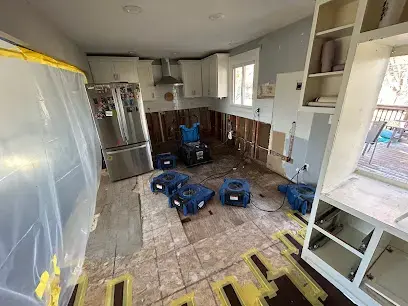
Roof, attic and drying belong in one plan
A wet ceiling and a roof edge are two halves of the same problem. If only the ceiling is dried, the next thaw can soak it again.
If only the roof is fixed, wet insulation and drywall stay in place and slowly cause trouble.
The attic side
Wet insulation is removed, since it does not dry well once it is packed down. The roof deck and rafters are checked with a moisture meter.
Air sealing and added insulation reduce the heat that feeds the next ice dam. See the Burnsville roof leak water damage page for how roof openings are handled.
The ceiling and wall side
The ceiling below is mapped with a meter and a thermal camera, and wet drywall is opened where readings call for it. Wall tops are checked, since water often runs down the inside of an exterior wall.
Air movers and dehumidifiers dry what remains, and readings continue until the framing reaches the goal.
How the drying is done
The restoration team checks the attic, the ceiling and the wall tops, then decides what must come out and what can dry in place. The ice dam water damage page explains the full scope.
Cold weather slows drying, so heated air and dehumidifiers matter. A room kept warm dries faster than one where the heat is turned down.
Winter drying needs patience. Cold air carries little moisture, so the team keeps the room warm and the dehumidifiers running to give the water somewhere to go.
- Wet insulation is removed and replaced.
- Ceiling drywall that stays wet is cut out and replaced.
- Wall cavities are dried in place with air movers.
- Daily readings show when the structure reaches the drying goal.
Prevention, and a note from next door
Seal air leaks in the attic floor, add insulation and keep vents clear so the roof stays cold. Clear snow from the lower few feet of the roof only from the ground with a roof rake.
Bloomington's spring tips list ice dams, frozen ground and clogged storm inlets as causes of localized flooding, and recommend testing sump pumps in spring. Its Bloomington ice dam water damage page covers the same pattern, and the frozen pipe and ice dam risk check helps Burnsville owners judge exposure.
Owners who see ice at the eaves should also watch the inside of the home on the next warm day, since that is when trapped water is released.
Questions
What causes an ice dam?
Heat from the home melts snow on the roof. The water runs to the cold edge and refreezes, and later meltwater backs up under the shingles.
How can an ice dam leak be told from a plumbing leak?
Ice dam stains usually appear near exterior walls or at window tops after a thaw. A plumbing leak is more often near a bath, a kitchen or a supply pipe.
Is wet attic insulation dried or replaced?
It is usually removed and replaced. Once packed down, wet insulation does not dry well.
Should snow be removed from a roof?
A roof rake used from the ground can clear the lowest part of the roof. Climbing on a snowy or icy roof is dangerous.
Does homeowners insurance cover ice dam damage?
Many policies cover sudden interior water damage from an ice dam, but wording varies. Check the policy or ask the insurer.