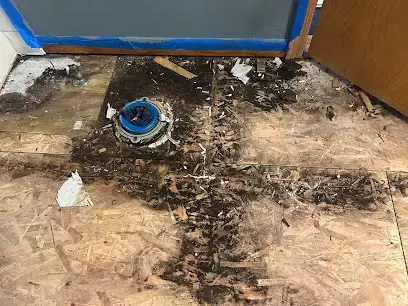
When sewage rises in a floor drain or a tub, the first question is usually who is responsible. In Bloomington the answer depends on where along the sewer pipe the blockage sits.
Key takeaways
- The city runs the sewer main in the street, and the property owner is responsible for the service pipe that runs from the house to that main.
- Bloomington checks the sewer main in the street at no charge when a backup is reported to Utilities.
- In 2020 the city logged seven main backups affecting eleven homes and 73 service pipe backups among about 25,000 service connections.
- Sewage is Category 3 water, so porous materials it touched are removed and surfaces are treated, not simply dried.
- Photograph everything before cleanup and ask the insurer about sewer backup cover, since many policies need a rider.
Why the answer depends on where the backup starts
A home is joined to the city sewer by a service pipe that runs under the yard to the main in the street. Every drain in the house empties into that one pipe.
If the blockage is in the pipe the owner is responsible for, the owner handles the clearing and the cleanup. If the blockage is in the main, the city has a role, and that is why the first call matters.
On paper the split is simple. In a basement it is confusing, because a homeowner sees only the symptom: a toilet that gurgles, a tub that fills from below or a floor drain that bubbles.
Backups start at the lowest drain in the house. In a home with a lower level, that is usually a floor drain, a laundry tub or a shower, and the water takes the easiest way up.
What the city checks and what the owner owns
Bloomington Utilities runs city water and the sanitary sewer collection system. The city keeps sanitary and storm sewers separate, so rain runoff and household waste travel in different pipes.
The city side
When a backup is reported to Utilities, the city checks the sewer main in the street at no charge. A crew can tell whether the main is flowing or blocked.
If the main is clear, the problem is on the private side of the connection.
The owner side
The property owner is responsible for cleaning, maintaining and repairing the service pipe from the home to the main. That covers roots, breaks and blockages in that stretch.
The cleanup of the house is the owner's job as well, which is where a restoration crew comes in.
What to do before anyone arrives
Stop running water. Every flush, shower and load of laundry sends more water toward the same blocked pipe.
Keep children and pets out of the affected room, and leave the floor drain alone until the source is known.
What the 2020 Bloomington numbers show
The city has published how many backups it saw in 2020, and the split is useful for any homeowner trying to guess where a problem starts.
- Seven sewer main backups affected eleven homes.
- 73 backups were in service pipes, among about 25,000 service connections.
- About 10.5 million gallons of sewage leave Bloomington each day through pipes averaging six to 48 inches.
- The wastewater goes under the Minnesota River to the Seneca Wastewater Treatment Plant in Eagan, run by Metropolitan Council Environmental Services.
What usually causes a blockage
The city names a short list of causes, and almost all of them are things a household can control.
- Grease poured down a kitchen drain that hardens in the pipe.
- Roots that enter a joint in the service pipe.
- Rags, paper towels and diapers flushed down a toilet.
- Garbage disposal misuse, such as grinding stringy or fatty scraps.
What Category 3 water means for the cleanup
Sewage backup is classified as Category 3 water, the most contaminated category. It carries bacteria and waste, so it is never treated like a clean supply leak.
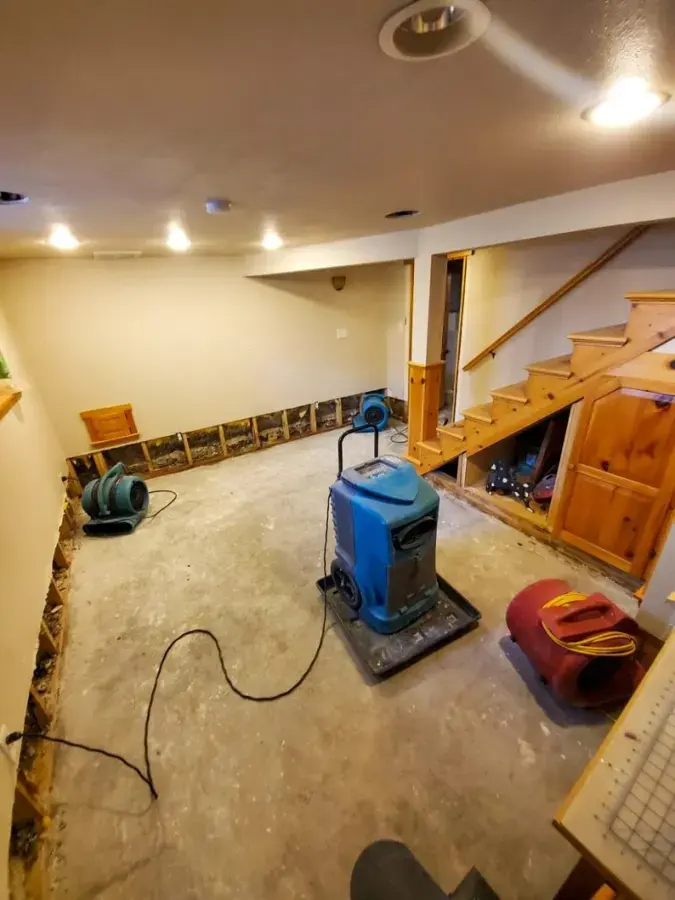
The goal is to contain the area, remove what cannot be cleaned and treat what can. The crew works in protective gear, and the affected rooms are sealed off from the rest of the house.
Hard surfaces get a thorough cleaning and a treatment step, and the area stays isolated until it is done. Washable cloth items may be laundered, while cardboard, paper and other porous items that touched sewage are discarded.
The crew explains what is being removed and why before it goes, so the owner can note it for the insurer.
- Standing sewage is extracted first.
- Carpet, pad, wet drywall and insulation that touched the water are removed.
- Concrete, framing and other hard surfaces are cleaned and treated.
- Drying equipment runs until readings reach the drying goal, and the Bloomington structural drying work finishes the job.
Documenting the loss for the insurer
Many homeowner policies limit or exclude sewer backup unless a rider has been added. The only way to know is to read the policy or ask the insurer.
Either way, a clear record helps. Photographs, a list of removed items and the date of the report to Utilities all belong in the file.
One more habit helps a claim: keep every receipt and every photo in one folder from the first day. Adjusters ask for them, and gathering them later is harder.
- Photograph the drain, the waterline and every affected item before cleanup.
- Write down when the backup started and who was called.
- Keep the receipt for any plumber or drain cleaning visit.
- Ask the restoration team for its drying readings and a written scope.
Keeping sump water out of drains
City and Minnesota plumbing codes bar sump pump water from going into a floor drain or a laundry tub. It should be directed outside, at least 10 feet from the foundation.
Sending clear water into a drain adds load to the same pipes that carry sewage, so it is a practice worth avoiding. For a full outline of the cleanup process, see the Bloomington sewage backup cleanup page, the broader Burnsville sewage backup service page or the Bloomington water damage hub.
Questions
Who is responsible for a sewage backup in Bloomington?
The city runs the sewer main in the street, and the property owner is responsible for the service pipe from the house to the main. The owner also handles the cleanup inside the home.
Does the city check the sewer main after a backup?
Yes. When a backup is reported to Utilities, the city checks the sewer main in the street at no charge.
Can sewage backup be dried like clean water?
No. Sewage is Category 3 water. Porous materials it touched are removed, and hard surfaces are cleaned and treated before drying.
Is sewer backup covered by homeowners insurance?
Many policies limit or exclude it unless a rider has been added. Check the wording or ask the insurer.
What commonly causes a backup in Bloomington?
The city names grease, roots, rags, paper towels, diapers and garbage disposal misuse.