Water Heater Leak Cleanup in Eagan, MN
A tank that fails can empty itself and keep refilling until the supply is shut. The Eagan restoration team extracts the water, checks the finished rooms nearby and dries carpet, pad and wall bottoms.
(888) 432-4933Tank leaking? Get it dried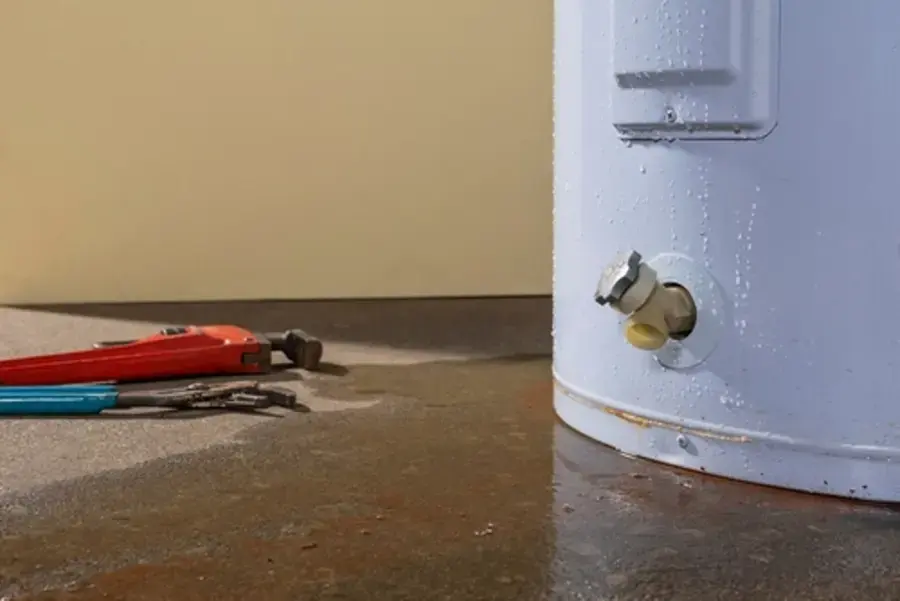
Water from a tank starts out clean, and that works in favor of a quick recovery. A leak found within a day or two usually remains Category 1, so more carpet, board and framing can be saved by drying in place.
First steps for water heater leak cleanup in Eagan
Shut the cold inlet
Find the cold water valve on top of the tank and turn it off.
Kill power or gas
Switch the breaker off or close the gas valve, only if you can reach it dry.
Beware of hot water
Water from a leaking tank can scald, so stay clear until it cools.
Photograph the tank
Record the unit, its label and the water around it.
How water heater leak cleanup is handled in Eagan
The tech who does the walkthrough maps moisture before any equipment goes down, so the drying plan matches what is actually wet. Equipment stays until the readings say dry, not until it looks dry.
- 1
Stop the tank
Supply and power are shut before work starts.
- 2
Pick up the water
Water on the floor and in carpet is lifted out.
- 3
Check next door
Meters follow the water under walls and into nearby carpet.
- 4
Dry and log
Daily readings continue until materials match dry.
Why tanks give out in Eagan houses
The housing numbers explain the age profile. About 9,658 Eagan homes were built from 1980 to 1989 and 6,583 from 1990 to 1999, so a large share of the city's water heaters have worked for decades. A tank wears from the inside, and the first sign is often a damp patch of floor or a rusty seam.
- Corrosion at the bottom of the tank or at a fitting.
- A relief valve that drips and then lets go.
- A cracked supply connector above the tank.
What the cleanup looks like
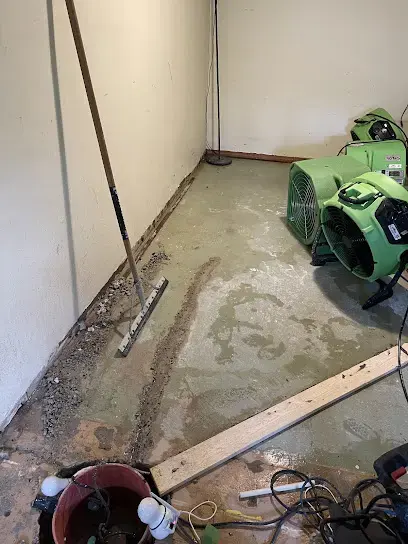
The water gets shut off before anything else, then the extraction crew lifts what is on the floor. The tech looks in the neighboring room, along wall bottoms and around any floor drain, since tank water travels. Meters and a thermal camera outline the wet zone, and LGR dehumidifiers and air movers dry it. A leak that ran for a day or more may have drifted to Category 2, which changes what is removed.
- Pad is lifted if water got underneath.
- Wall bottoms are opened only where meters read wet.
- Daily readings continue until the structure is dry.
Tank leaks and insurance
A sudden rupture often gets different treatment than a slow leak that went on for months. Hold on to the failed tank or a photograph of it, together with the moisture map and drying logs. Whether it is covered turns on the policy, and the owner's insurer can say. A bigger version of this loss is on basement flooding cleanup, and the method behind the first step is on water extraction.
Water heater leak cleanup across Eagan and nearby towns
The Eagan drying team handles tank leaks across ZIPs 55121, 55122 and 55123, from Blackhawk Lake South and Thomas Lake Heights to Cedar Cliff, Cherrywood, Central Eagan and South Eagan.
The same service nearby: water heater leak cleanup in Burnsville, Apple Valley, Bloomington.
Related water damage services in Eagan
Water Heater Leak Cleanup questions in Eagan, MN
01How much water comes out of a failing tank?
As much as the tank holds, and it can keep refilling from the supply until the valve is shut, so closing the inlet is the first move.
02Is the water clean?
It begins as clean supply water, Category 1. If it sits for a day or more or crosses dirty surfaces, it can slip to Category 2.
03Why is the carpet in the next room wet?
Tank water runs under walls and along the slab, so it can surface in carpet and wall bottoms away from the heater.
04Will my policy cover it?
A sudden failure is often covered and a slow leak often is not. Check your own policy and keep photos of the tank.
05What signs show a tank is on its way out?
Rust at the seams, moisture around the base or a dripping relief valve all justify a plumber's visit.
06How many days will it take to dry?
Three to five days is normal for a contained leak. A wet slab or finished rooms can add time.
Tank failed in your Eagan home? Call now.
Water from a tank slides beneath walls into finished rooms, which is why pickup and meter checks happen first.
Burnsville Water Damage Restoration · Burnsville, MN