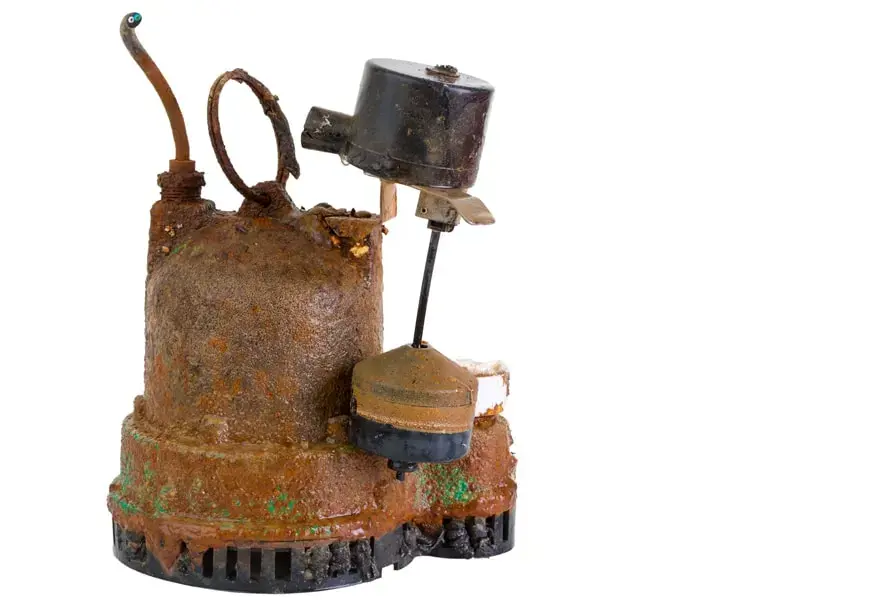
A sump pump is the quiet part of an Eagan basement until the pit fills and water spreads across the floor. The pump also sits inside a city rule that shapes where its water is allowed to go.
Key takeaways
- Eagan City Code Section 3.40, Subdivision 10, prohibits sump pump, foundation drain and gutter connections to the sanitary sewer.
- The city completed over 19,000 sump pump inspections from 2010 to 2014 and made more than 850 repairs.
- When a water meter is replaced, the city inspects for clear water connections, and required repairs must be done within 60 days.
- A pit that is overflowing needs the power, the pump and the discharge checked, in that order.
- Water that reaches a finished lower level is extracted first, then walls and floors are opened where readings call for it.
What a sump pump does in an Eagan home
Many homes have drain tile around the footing that collects groundwater and sends it to a pit. The pump lifts that water out of the pit and away from the house.
Most Eagan homes were built in the 1980s and 1990s, and the pumps in them have often run through many wet springs. A pump that is working hard in heavy rain is normal, but a pump that stops is a flood waiting to happen.
When the pump keeps up, a homeowner never sees the water. When it does not, the first sign is often a damp patch near the pit or a wet edge on the carpet along an outside wall.
Two things cause most failures: the pump loses power, or it cannot move water as fast as it arrives.
Eagan's clear water rule
Eagan City Code Section 3.40, Subdivision 10, was adopted September 1, 2009. It prohibits sump pump, foundation drain and gutter connections to the sanitary sewer.
The reason is capacity. Clear groundwater and rain that enter the sanitary system add to the flow that the sewer is built for, and a heavy rain can overload it.
- Sump discharge goes outside, onto the yard, not into a floor drain or the sanitary sewer.
- Gutter downspouts must not connect to the sanitary sewer.
- Foundation drains must not be tied to the sanitary sewer.
- A backup of sewage into a floor drain is a different kind of loss, handled as Category 3 water.
Why the city inspects
A 5 inch rainfall on October 5, 2005 led to Metropolitan Council surcharges for excess clear water in sanitary sewers, starting in 2007. Eagan answered with inspections.
The rule is one reason a pump has to move water outdoors. Where the discharge ends, the grading and the downspouts decide whether that water returns to the foundation.
- The city completed over 19,000 sump pump inspections from 2010 to 2014.
- Those inspections led to more than 850 repairs.
- Eagan was not fined by the Metropolitan Council after the 2014 peak sewer flow events that hit other metro cities.
Meter replacement and the 60 day window
When a water meter is replaced, the city inspects the home for clear water connections.
If one is found, the repair must be done within 60 days. Homeowners who rerouted a pump discharge as a result should confirm that the new route sends water well away from the foundation.
When the pit overflows: what to check first
Standing water around the sump pit is a stress moment, and the order of checks matters. Start with the simplest cause and work toward the hardest.
Each check takes only a moment, and it tells the team and the plumber a lot. If the pump runs but the water does not leave the pit, the discharge is the likely cause.
- Power: confirm the pump is plugged in and the breaker or GFCI outlet has not tripped.
- Float: lift the float switch by hand to see whether the pump starts.
- Intake: debris can clog the base of the pump and stop it from lifting water.
- Discharge: a frozen, kinked or disconnected pipe outside holds water in the pit.
- Capacity: in a long rain, even a healthy pump can fall behind.
What the cleanup looks like
Groundwater is cleaner than sewage, but it still carries soil, and water that sits on carpet or drywall for a time becomes harder to clean. That is the reason speed matters.
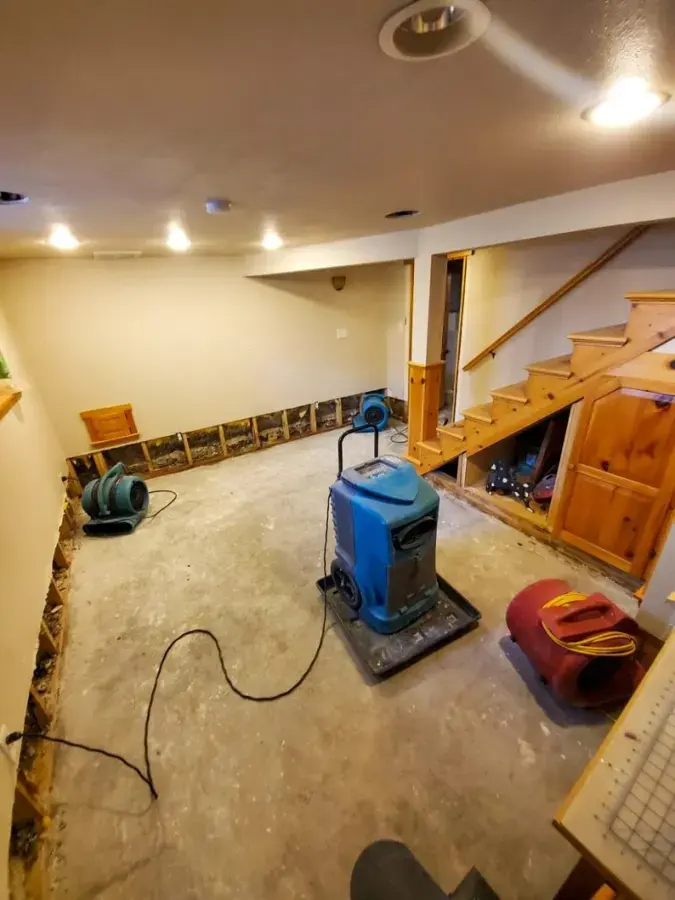
The restoration team starts with extraction, pulling standing water from the floor and from carpet. Then moisture readings show which walls, floors and framing took on water.
Most overflows stay shallow, but shallow water still wicks upward into drywall and into the carpet. The sooner it comes out, the less of the finish has to be replaced.
If the water sits in the wall cavity behind finished drywall, the wall is opened where readings call for it, and only that section.
- Wet carpet pad and the bottom of drywall are often removed.
- Furniture and storage boxes are moved off the floor and onto blocks.
- Air movers and dehumidifiers run until readings reach the drying goal.
- The team records readings daily for the insurance file.
Finished basements and what they hide
A finished basement hides the places water goes. It travels under flooring, into wall bottoms and behind baseboard before anyone sees it.
In a neighborhood like Blackhawk, with late 1980s to mid 1990s multi level homes, a finished lower level often has framed walls and carpet over a concrete slab. The Eagan sump pump failure cleanup page and the basement flooding cleanup page lay out how each part is handled.
Moisture in a basement does not stay in one spot. It moves into trim, into the bottom plate of a wall and into stored belongings, so the team checks beyond the visible wet area.
Keeping the pump ready
A sump pump deserves a short check before the wet season. A few steps catch most problems early.
For wider context on how the restoration team treats pump failures across the area, see the Burnsville sump pump failure cleanup page and the Eagan water damage hub.
- Pour a bucket of water into the pit to see the pump start and stop.
- Confirm the discharge pipe leads outside and drains away from the foundation.
- Clear the pit of silt and debris.
- Consider a battery backup for power outages.
Questions
Can a sump pump discharge into the sanitary sewer in Eagan?
No. Eagan City Code Section 3.40, Subdivision 10, prohibits sump pump, foundation drain and gutter connections to the sanitary sewer.
When does the city inspect for clear water connections?
The city inspects homes for clear water connections when a water meter is replaced. Required repairs must be done within 60 days.
What is the first thing to check when a sump pit overflows?
Check the power first, then the float, the intake and the discharge pipe. A tripped breaker or a frozen discharge is a common cause.
Is sump pit water the same as sewage?
No. Sump water is groundwater and is cleaner than sewage, but it can carry soil and becomes harder to clean the longer it sits.
Does homeowners insurance cover a sump pump failure?
It varies. Some policies cover sudden water damage only with a specific endorsement. Check the policy wording or ask the insurer.