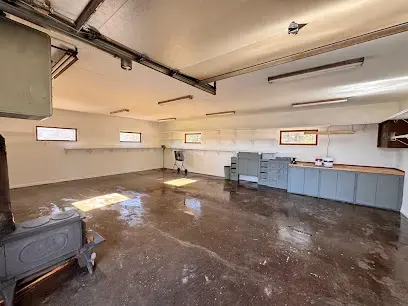
Many Burnsville homes were built as split levels, split entries and ramblers, and many have a finished lower level with a family room, a bedroom or a bath. When water gets in, that finished space is where most of the damage lands.
Key takeaways
- Most Burnsville homes date from the 1960s through the 1980s, and many have finished lower levels.
- Standing water is extracted first, because the longer it sits the further it spreads into carpet pad, wall bottoms and trim.
- What is removed depends on the source of the water: clean water, groundwater and sewage are handled differently.
- Structural drying uses moisture readings to decide when framing, subfloor and concrete are dry.
- Daily readings, photographs and a written scope make the insurance claim easier.
Why the lower level takes the hit
A split level or split entry sits partly below grade, so the lower level is the lowest place in the house. Water from a failed pump, a heavy storm, a backed up drain or a leaking tank all end up there.
That space is also where families put finished rooms. Carpet, drywall, trim and furniture take on water quickly, and a concrete slab underneath holds it for a long time.
Burnsville is also a city of lakes and low spots, with Crystal Lake, Keller Lake, Earley Lake, Lac Lavon and Alimagnet Lake among its water features. A lower level near water has more reason to take the risk seriously.
The first day
The first steps are about safety and about slowing the spread. Water near outlets, a furnace or a water heater is a shock risk, so power is shut off to the area first.
It is natural to want to start cleaning right away, but a few careful minutes spent on safety and photographs save trouble later.
- Shut off power to the wet area if the panel is dry and reachable.
- Stop the source if it is a leak, by closing the supply valve.
- Lift furniture, boxes and electronics onto blocks or move them upstairs.
- Photograph the waterline and every affected item.
- Call a Burnsville basement flooding cleanup team to start extraction.
What the source of the water means
The way the water entered shapes the whole plan. The restoration team asks about the source before it starts, since each type is handled differently.
Clean water from a leak or tank
A supply pipe or a water heater releases clean water. It is the easiest to dry, and carpet and pad may be saved if it is reached early.
Storm water or water through the foundation
Water that comes through a foundation, a window well or a sump pit carries soil and runoff. It is treated as dirtier, and carpet and pad are more often removed.
Sewage
A backup is Category 3 water, and porous materials it touched are removed. The area is contained and treated, which is a separate process described on the sewage backup cleanup page.
Extraction comes first
Truck mounted or portable extractors pull standing water, and a smaller wand lifts water from carpet and pad. The sooner the water is out, the less of it soaks into drywall and trim.
The water extraction work is the most urgent step, and it sets up everything that follows.
Removing carpet pad quickly matters, because pad acts like a sponge and keeps water against the slab. Pulling it back lets air reach the floor.
- Standing water is pumped off the slab.
- Carpet is lifted so the pad and the slab can be reached.
- Wet pad is removed and discarded.
- Moisture is measured at the wall base before any drywall is cut.
What comes out and what stays
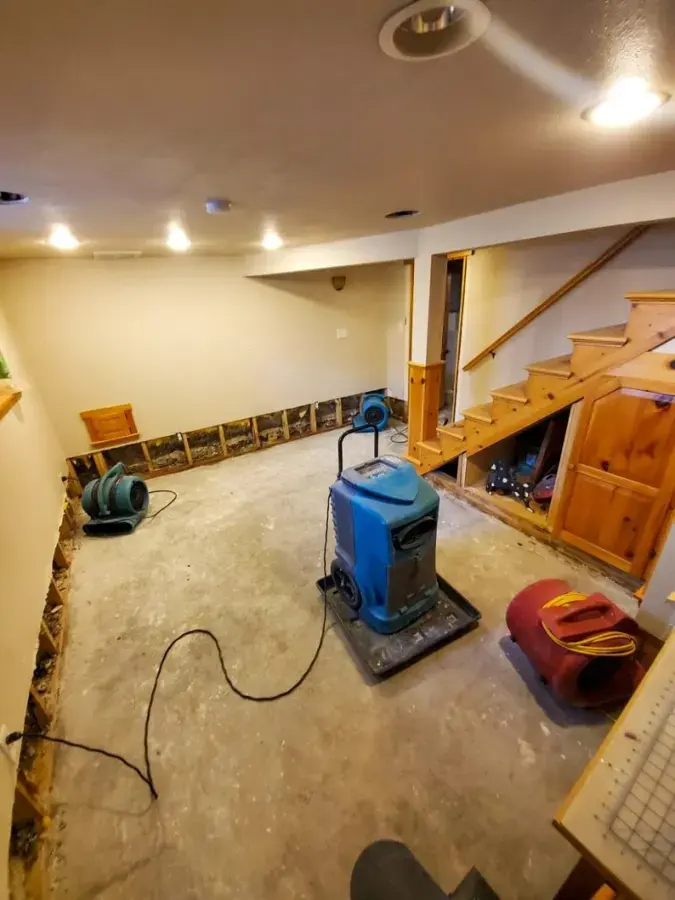
The goal is to remove only what readings say cannot dry, since replacing less keeps the cost and the disruption down. A moisture meter and a thermal camera show how high the water wicked into the walls.
Not everything has to go. A dry reading on a wall above the cut point means that section can stay in place.
- Wet carpet pad is usually removed, and clean carpet may be dried and kept.
- Drywall that wicked water is cut back to clean, dry material, often a short way above the waterline.
- Insulation in wall cavities that took on water is replaced.
- Baseboards are removed so the wall base can dry.
- Hard flooring such as tile and concrete is cleaned and dried in place.
How structural drying finishes the job
After removal, air movers push dry air across wet surfaces, and dehumidifiers pull moisture out of the air. Together they dry framing, subfloor and concrete.
Concrete is the slow part, because it holds water and gives it up gradually. Readings are taken every day, and equipment is moved to where the numbers are highest.
The structural drying and dehumidification page describes the drying goal in more detail, and the drying time estimator gives a general idea of how long a loss might take.
- Air movers dry surfaces and wall cavities.
- Dehumidifiers pull moisture out of the air.
- Readings are taken daily on drywall, framing and concrete.
- Equipment stays until readings reach the drying goal.
Documentation, timing and next steps
A clear record helps with the insurer and with any rebuild. The team keeps daily readings and a list of what was removed, and homeowners can add dated photographs.
Rebuilding begins only after readings show the structure is dry. That keeps new drywall and flooring from trapping moisture.
Keep clear of any rebuild until the written final readings are in hand. That is the point at which the drying is complete.
- Keep photographs of the water, the damage and the equipment.
- Save receipts for repairs and for any plumber or pump work.
- Ask for the written scope and the final readings.
- Check the policy for sewer backup and sump pump endorsements.
Questions
Why do split level homes flood in the lower level?
The lower level sits partly below grade, so it is the lowest part of the house. Water from a pump failure, a storm, a drain backup or a leaking tank ends up there.
Can wet carpet be saved?
Sometimes, if the water was clean and was reached early. The pad is usually removed, and carpet from groundwater or sewage is removed.
How does the team know when the basement is dry?
Moisture readings are taken every day on drywall, framing and concrete. The structure is dry when those readings reach the drying goal.
Why is drywall cut above the waterline?
Water wicks upward through drywall, so the wet area is often higher than the visible waterline. Cutting back to dry, clean material lets the wall be rebuilt properly.
Is a flooded basement covered by homeowners insurance?
It depends on the cause. Sewer backup, groundwater and sump pump failure often need specific endorsements, so check the policy wording.